In one line: One of the rewards of traveling is the inspirational ideas and little bites of culture you get to bring back to improve your daily life.
Inspiration for America

Going on ~3 months of travel in Western Europe and while much of the culture is vastly different and leaves much to be desired for many Americans (#A/C #serviceeconomy #economicopportunity, etc.), I have found a bunch of bright spots that the U.S. could import.
- Innovation via Worldview Expansion – Three Ideas Worth Stealing
- Alternative & Affordable Public Transport
- Clean Water Accessibility
- Fresh Farm Food Accessibility
- Cultural Importing
- High-Trust Societies
Innovation via Worldview Expansion – Three Ideas Worth Stealing
“Good artists copy. Great artists steal.” – Picasso
- Alternative & Affordable Public Transport
- Clean Water Accessibility
- Fresh Farm Food Accessibility
Alternative & Affordable Public Transport
The U.S. is leading the world in in technological innovation in many areas and although the world order remains in a big kerfuffle, the US continues to attract many of the world’s best entrepreneurs—one of the main ingredients helping them maintain an edge. But, leading in AI and Crypto isn’t the only solution to posterity, and while I believe in their strategic importance, I think the U.S. would really benefit from taking a page out of some of the developed Western counterparts across the pond. And, just because the U.S. is leading in one or two areas, doesn’t mean they shouldn’t strive to be the global leader in others. In particular, there seem to be tremendous gains available in infrastructure development and state & local public works.
In Europe, you can travel in between almost any country seamlessly via high-speed rail; an alliance of 29 countries otherwise known as the “Schengen Area” is one of the many things that makes this feasible. The trains are incredibly reliable, high tech with functional mobile apps, clean, run frequently, and one of the smoothest and easiest forms of travel that exist. They are also affordable and easy to navigate. In line with the education and healthcare systems that are bloated and ineffective in the USA, the public works & transportation continue to fail in serving society in most parts of the country.
In one line: The U.S. should either dismantle Amtrak or create public-private partnerships to reinvigorate industry, birth new Robber Barron’s, and fuel a modern-day Industrial Revolution in transportation & infrastructure development.
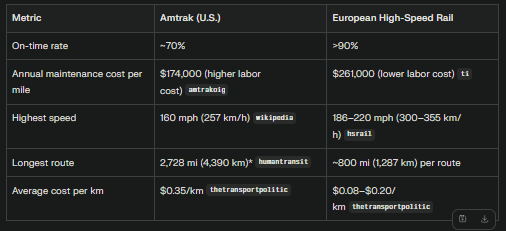
After doing a few quick searches, the US infrastructure budget for 2025 is $72.3 billion. Alternatively, the total estimated investment needed from the EU, regional, and national levels is estimated to be $500 billion by 2050. That’s a total investment that’s less than 50% of the net interest the US is scheduled to pay on its debt for 2025 ($1.1 trillion). Separately, the US Government has spent an average of $17.95 billion per day since January 1st, 2020 (until 8/31/2025). That’s a total of $37.1 trillion. The U.S. has no excuse not to have the best infrastructure, public works, and most advanced energy systems in the world with that kind of spending.
Think about it this way, 1 million seconds is ~32 days. 1 billion seconds is ~32 years. 1 trillion seconds is ~32,000 years. Thirty-seven trillions is A LOT of trillions, like ~49,000 Burj Khalifa’s worth of $100 bills stacked on top of each other.
This reminds us that there are three stages to society in the cyclical downfall of civilizations: savagery, ascendance, and decadence. We rise because of savagery (Civil War). We rule in Ascendance (Bretton-Woods & Post WWII). We fall because of decadence (COVID acceleration).

In One Prescriptive: Get the deficit in order; stop taking the shortcut to the long road; accept a few years of pain for many years of gains; invest in infrastructure that will improve the average quality of life in the USA; escape the Myopian Epoch of US politics that has been fueling our choices in order to build a greater legacy for future generations.
*Author’s Note: I am not qualified to be offering prescriptions on any of these matters; these are simply opinions and novice observations.
Clean Water Accessibility

At least 15-20 European countries offer widespread, high-quality public drinking fountains in many of their major cities. This is one of those underestimated public works benefits for local population and visitors. First, having clean drinking water eliminates the need to buy plastic water bottles and is a huge convenience for all. One example in the US is in NYC parks alone, the installation of 3,500 fountains has eliminated the use of 1.9MM PET bottles per year. Second, a hydrated population is a healthier population. Third, it improves quality of life where there are advanced water infrastructure systems and people can access water conveniently and cheaply. Some examples of this include a study that was done in Germany that increased daily water consumption by 1.1 glasses per day and a 31% reduction in obesity rates compared to places without public fountains. Beyond reducing single use plastic consumption & pollution, it’s been shown to also reduce sugary drink intake (#diabetes), encourage exercise and fitness, and support mental well-being in urban environments.
While there are obvious parts of the U.S. that have water scarcity issues, many of the issues are tied to aging water infrastructure with a lack of investment, prioritization and decentralized governance between Federal, State & Local politics.
In one line: An abundance of free public water fountains in most major U.S. cities is a sneaky and overlooked initiative that could provide a lot of benefit to locals and should get more tax dollars.
Fresh Farm Food Accessibility


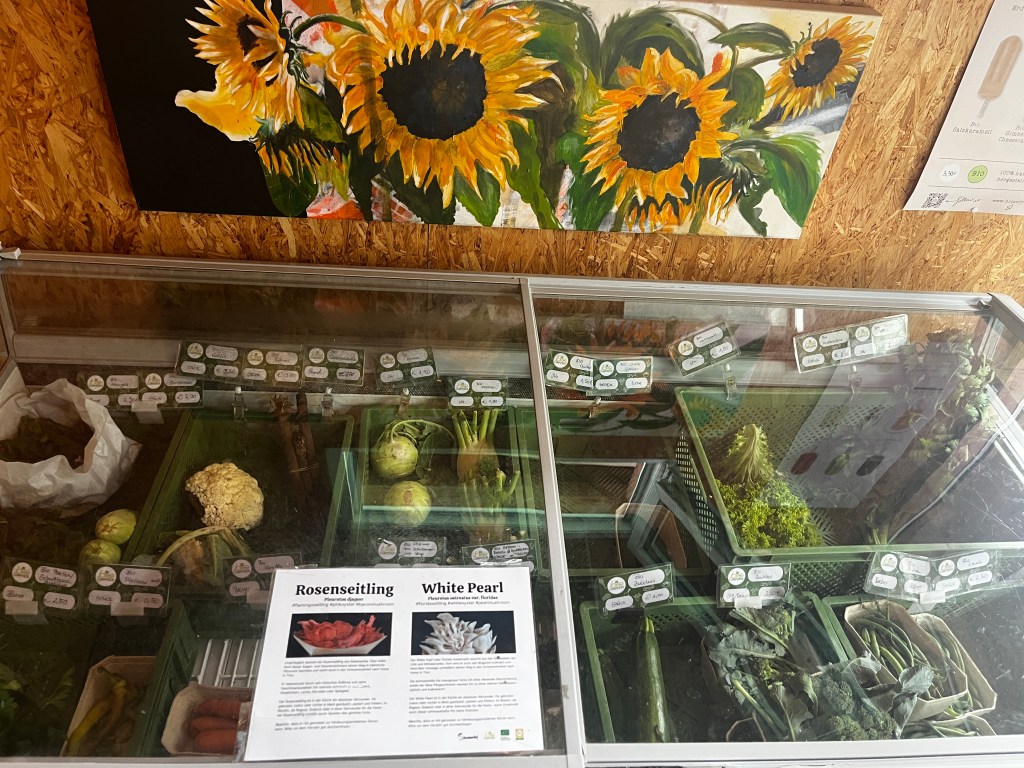


This idea came specifically from a very small village in Austria (<3,000), Fritzens. There is a farm that has a small self-service honor-system bodega that’s regularly replenished with organic produce and foods a few times per week. Because there’s no one working there, it’s open 24-7. In a span of a week, I went there 5 times and was the only person there—no lines, no waits, no humans, no rush. There was a wide selection of fruits, vegetables, eggs, grains, drinks, and other products—sufficient to cover about 60-70% of my weekly produce shopping.
The key underpinning here is that Austria overall has one of the lowest crime rates in the world, and this village in particular, being so sparsely populated, can operate on a full-trust-basis. This allows locals to pay independently and at their discretion. One of the other fascinating aspects is that it is ultra-efficient for the farm—there’s no distribution or intermediary cost for them to provide their products—it’s direct-to-consumer. I imagine this could be a really beneficial model for many farms around the world, but it’s probably not realistic to think it could be scalable. If it were, this would be a massive benefit to any local population and seems like a great idea for smaller towns and villages to steal.
I could also envision some sort of membership model in the U.S. in cities, neighborhoods, towns, or villages that partnered with farms or co-ops to implement something similar. Modern day technology advancements would likely allow for a relatively low cost implementation on basic security measures and accessibility that could make it more feasible to prevent theft and align interests among member participants.
In one line: Easy access to high quality clean organic products is another underestimated public benefit that leads to major gains in quality of life and overall health for local populations.

Cultural Importing
When we travel and explore new places, we can share those experiences with those who weren’t with us by bringing traditions, practices, and new ideas back to our daily lives. And even though the US is known to be one of the more innovative countries in the world, it would benefit greatly by trading American Exceptionalism for Picassoian theft of the greatest ideas around that world that improve the average quality of life for the most amount of citizens.
High-Trust Societies
Federal, state & local governments could benefit from focusing on reducing crime rates, which could create a higher trust society and in turn, improve the average quality of life for local populations. Beyond sharing resources, I believe this is one of the main reasons why there are more and more people looking to build private remote communities where everyone contributes their own skills, resources, and abilities for the benefit of the group. Because ultimately, a higher quality of life can be achieved with less stress, better long-term health and a more peaceful environment, if it actually works.

In one last line: The point isn’t that Europe > USA; it’s that Europe, along with every other densely populated continent, has key insights into areas where the USA can make meaningful improvements to the quality of life & well-being for the average citizen, increase longevity, and improve the country for future generations; it won’t be the wealthiest country forever, so the time to strike was probably 10-20 years ago and the next best time is right NOW.
 Philoso-Feed